

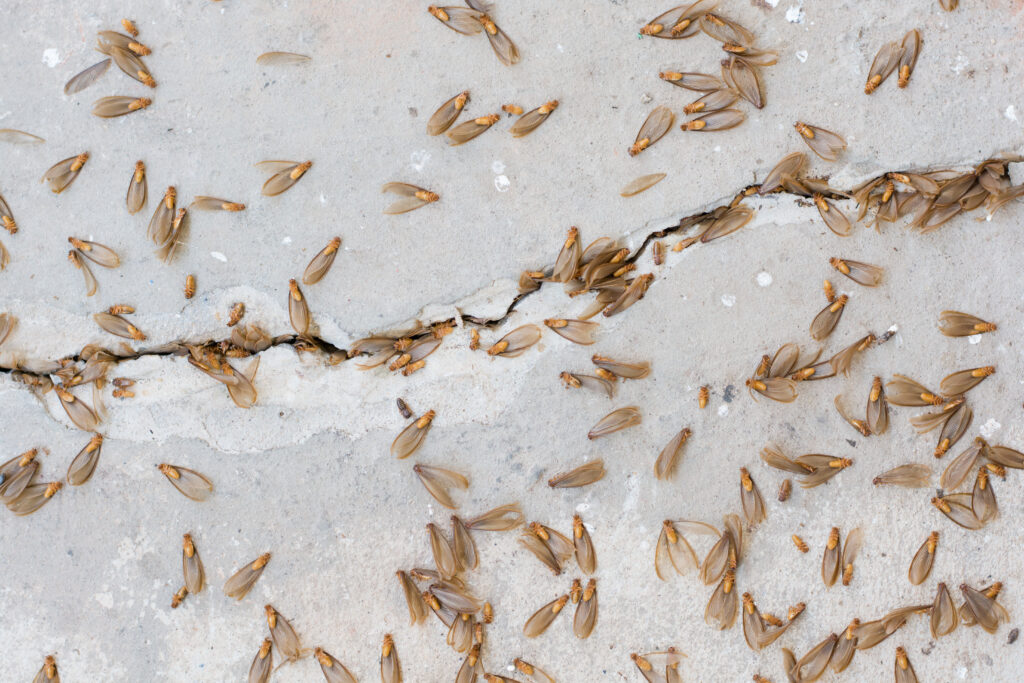
Your heart naturally drops when you see a swarm of flying insects buzzing around your living room window or clustering together on your front porch. It’s easy to panic and immediately fear the worst for your home. These situations typically occur on humid summer afternoons following a storm. You were looking forward to relaxing all day after the rain, but instead you find yourself Googling frantically for answers.
Hundreds of winged insects flying around your home means a likely colony nesting either in or near your property. But how did you get termites? And more importantly, how do you get rid of them?
A sudden swarm can be unnerving, but take a few deep breaths, and you can handle it. Remember, these insects won’t bite you or your pets, and they sure aren’t going to devour your house in the course of an afternoon. If anything, your house was likely damaged well before you even saw the swarm, which certainly isn’t comforting, but definitely worth considering.
Termite swarmers are reproductive members of the colony looking to start new nests. By knowing how to identify them and what steps you should take during a swarm, you can handle the situation long before termites become your worst financial nightmare.
Identifying Termites in Your Home
First, you need to confirm you’re dealing with a termite swarm and not an ant swarm. These two pests often get mixed up by homeowners because the species of both insects produce winged reproductives that appear extremely similar to the naked eye. You’re looking for:
- Antennae that are straight vs. elbowed
- Waist is wide vs. pinched or waspish
- Two sets of wings equal in length vs. wings of uneven length
Swarming termites often leave behind piles of their discarded wings. Once they take off into the air and successfully find a mate, they typically drop them in the immediate area. If you find small, clear, shiny wings all over your windowsills, doorways, or lining the edges of lamps, you most certainly have termites on your hands.
When Do Termites Swarm in Texas?
The timing is crucial if you live in the North Texas area. Most termite questions we receive revolve around When: When will they start attacking my home? When will I start seeing signs of termite infestations? And most commonly, when do they swarm?
The swarming season for termites in Dallas typically begins during the first few weeks of spring. After heavy rainfalls soak the soil, subterranean termites will emerge from the ground and look for a suitable place to start a new colony. While certain species swarm at different times of the year, for most of Dallas, you can expect the termite swarming season to last from March to May.
Throughout this period, termite colonies that are over 3 years old will produce hundreds or thousands of swarmers. If you notice termites inside your home flying towards windows or glass doors, they are being drawn to the light — and most likely, they’ve nested inside the walls or foundation of your home.
What Should I Do in a Termite Swarm?
Although it’s tempting to start spraying everything in sight, there are a few simple things you should do first when termites are in your home.
Step 1 | Collect a Sample
Before spraying or vacuuming up the swarm, pick up a couple of the insects with some clear tape. You can also put them in a small glass jar or plastic baggie. Giving your technician a sample gives them a 100% positive identification to treat for the correct pest.
Step 2 | Use the Vacuum
Instead of killing them with spray pesticides, pick up the insects with a vacuum. This also works great for collecting all of the dead wings left behind after the swarm passes. Dump the vacuum bag or canister in the trash — outside — when you’re done.
Step 3 | Document the Location
If swarmers are crawling out of the crack in your drywall, up and down your baseboards, or underneath your front porch, mark the spot. Pointing out the specific places they’re coming from helps your technician know where to spray specialized termite treatments.
Where Are Termites Entering From?
This is the hard part: figuring out how they’re entering your home. Termites are subterranean creatures; they live underground and travel to and from food sources through mud tubes. These serve as protection from the dry elements and predators. Without water, termites cannot survive for very long.
Inspect the foundation of your home and look for these pencil-sized mud tubes. They typically crawl up concrete slabs, behind siding, and through crawl spaces to get to the wood structures of your home.
Another major risk factor is wood touching the soil around your property. Make sure your fences, mulch beds, and firewood piles are not inviting termites into your home.
A Quick Home Protection Check-In
- Is your mulch touching the siding of your home?
- Do you have leaky outdoor faucets or pooling water around the foundation?
- Do you store your firewood up against the ground, maybe next to the garage?
- Have you noticed “bubbling” or peeling paint that looks like water damage?
If the answer to any of these questions is yes, your home has an increased risk for termite activity. Eliminating these extra sources of moisture and wood-to-ground contact is essential in preventative care.
Your Long-Term Solution for Keeping Termites Away
Finding termites in your home can be frustrating, but handling the swarm is only part of the battle. There is now a living, feeding colony most likely sitting quietly beneath your feet.
So how do you stop termites? The key is to treat the whole nest — not just the insects that you see.
Today’s pest control companies have two products that can help eliminate termite colonies for good.
Liquid treatments are applied to the ground around the foundation of your home, creating a chemical barrier that the termites can’t cross. Once a termite crosses this line and picks up the treatment, they take it back to the colony and share it with the rest of the population.
Baiting systems are also effective and involve placing stations throughout your property for the termites to feed on. These baits contain a growth regulator that will eventually kill off the entire colony.
Call on Pest G.O.A.T.S!
When you have a termite infestation, you want a Dallas pest control company that knows the DFW area. At Pest G.O.A.T.S Pest Control, we pride ourselves on providing customers with “Greatest Of All Time” Service.
Our team comes from one of the oldest family pest control companies in Texas, Willis Exterminating. We started Pest G.O.A.T.S Pest Control with the simple idea of giving DFW neighbors the best pest control service we could provide. Whether you live in Duncanville, Dallas, or one of the many cities in between, we have you covered.
Dealing with termites in and around your home is never fun. That’s why our technicians are trained to perform detailed inspections specific to your property. From North Texas clay-heavy soils to invasive insects only found in our area, we take every circumstance into serious consideration. Pest G.O.A.T.S Pest Control provides the professional-level termite control that you need to keep your home safe.
Don’t let bugs and critters take over your home. Let the Pest G.O.A.T.S. Pest Control take care of it for you!
Frequently Asked Questions
Q. Do termites always swarm when entering a home?
They don’t always swarm, but it’s very common to see them inside your home after they swarm.
Q. Are termites found in Dallas?
Absolutely! Termites thrive in Dallas weather. Our unique climate makes your home susceptible to termite activity.
Q. My house is older — will I still get termites?
Age doesn’t matter to termites; they’re just happy to be there. Termite damage has been found in homes ranging from new builds to 100+ years old.
Q. Is there really a difference between pest control services?
Every pest control company offers different types and levels of protection. At Pest G.O.A.T.s, we focus on sending highly trained professionals who care about you and your home.