

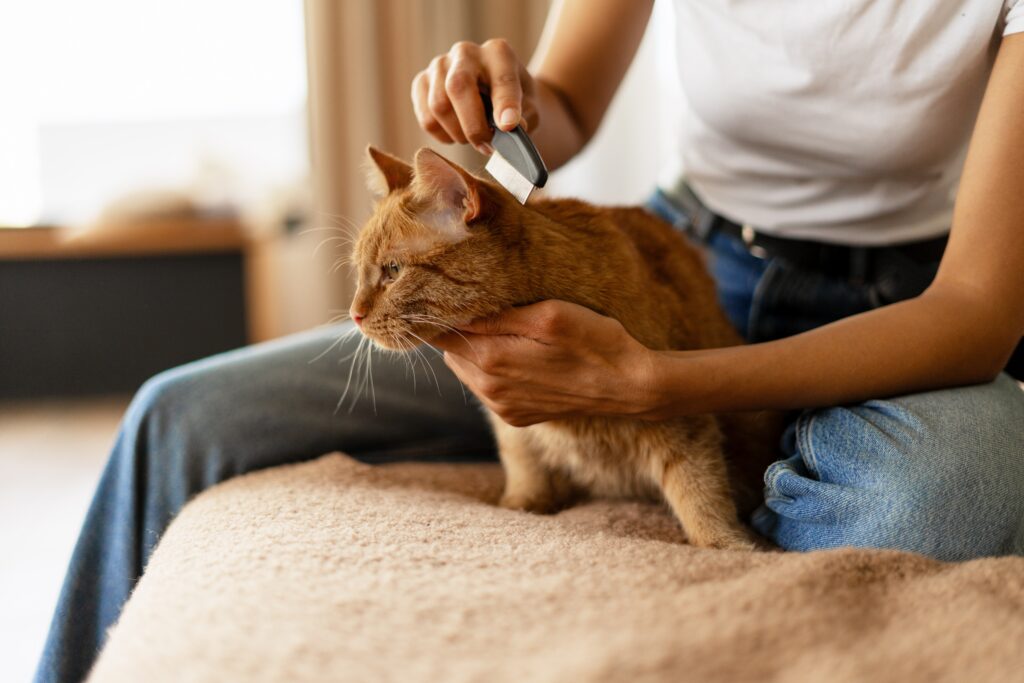
How to tell if you have fleas inside your home is something we often hear from customers. They return home from a relaxing night out with hopes of kicking back and relaxing with their families. Instead, these loving spouses and parents find themselves frantically scratching and pulling up their carpet in search of miniature vampires. If only they had realized the early warning signs of fleas in the house!
Once established indoors, these pests reproduce rapidly, making your kitty’s harmless itch into a full-blown house infestation. Catching these critters early can save you a lot of time, stress, and money. By knowing the signs of fleas before they completely take over your residence, you can stop minor problems before they blossom into uncontrollable situations. Read on to learn everything you need to know about spotting fleas.
How Do I Know If My House Has Fleas? Flea Infestation Treatment
If your home is experiencing a bad flea infestation, you will typically notice your pet’s restless behavior, pepper-like substances on your pet’s sleeping area, and itchy red bites on your ankles. Fleas themselves are extremely small and nimble, which makes it hard to spot them with the naked eye before they take over.
However, if you’re wondering how to tell if you have fleas in your home, look around you. These critters leave physical signs all over your home that are easy to spot. The most obvious clue is flea dirt. These black specks look like pepper dropped throughout your rugs, your pet’s sleeping area, or your carpet. To check if you have flea dirt, take a wet paper towel and squeeze the detected specks on the towel. If they smear and turn reddish-brown, you are dealing with digested blood.
Seeing the pests themselves is another surefire way to tell if you have a problem. Although they cannot fly, their back legs are powerful, allowing them to jump great distances. Run your legs through a carpet or rug and watch for small black dots hopping off your socks. Once again, these are most likely fleas.
First Signs of a Flea Infestation on Pets
Watch your pets for heavy scratching, skin biting, and the presence of small, quick-moving brown insects. These are all signs you may have fleas on your pets. Performing routine inspections on your pet’s skin will allow you to identify issues before they turn into full-blown infestations.
Fleas love to feast on dogs and cats. These insects will target your furry friend if given the chance, and your animal will display noticeable behavior changes when they start buzzing around. Constant licking, biting, or scratching of the skin is a clear sign that something is bothering your animal. Check your pet from head to tail, concentrating on the lower back area, base of the tail, neck, and groin. Pets tend to obsess over these bites since the bugs crawl around and bite through their coat.
Grab a metal comb with super thin teeth and part your pet’s hair. Run the comb through your pets hair shaft and wipe the debris onto a damp white paper towel. If you find small flat brown insects moving quickly, pull your pet inside and contact your vet. These insects can cause large bald spots and painful skin infections if left untreated.
Where Do Fleas Hide in a Home?
Dark and hidden areas are ideal. Fleas like to remain out of sight while they feed and develop. Rugs, couches, pet beds, and carpet make perfect hideouts.
Searching your home for the source can be half the battle. Inspecting your carpets closely is a great place to start. Fleas love to hide in carpet because the fibers create ideal nesting spots for eggs, larvae, and pupae. Out of sight from predators and safe from most dangers, flea larvae actually avoid light. You will typically find them deep down in the carpet lining where vacuum cleaners cannot reach them.
Fleas also love to hide in furniture, especially couches and chairs with cushy pillows. Inspect inside your cushion cracks and along your carpet’s baseboards. Dog and cat beds are also notorious hiding spots. Similar to your carpets, fleas stick to these fabrics because animals spend nearly all of their time resting in these locations. Eggs fall off pets’ hair during grooming and crawl inside these warm areas to develop.
Flea Life Cycle | Where Do Adult Fleas Hide?
| Stage | What they look like | Where they can be found |
| Egg | Small, white, oval eggs that fall off hosts | Carpet, dog beds, furniture cracks |
| Larva | Legless, off-white worms | Deep within carpet fibers, baseboards, and under furniture |
| Pupa | Cocooned in a sticky fluid | Carpet backing, floorboards, ground outdoors |
| Adult | Reddish brown insect with no wings | Host animals, rugs, upholstery, dog beds |

Are Flea Bites Dangerous? Flea Bites on Humans
Yes. Flea bites can cause severe itching, secondary skin infections ( caused by scratching), allergic reactions, and can spread pathogens/tapeworms to humans and animals.
Flea bites on humans are awful. They will appear as small red bumps clustered together anywhere on your body but usually concentrated around your ankles, shins, and feet. They will remain small and usually have a red circle around the center point where the pest took a blood sample. Unlike mosquitoes, they do not itch for a few days. Instead, these pests send you into instant razor strip withdrawals, making you want to scratch your skin off. As you begin to rip at your skin, you open yourself up to secondary infections, which are just as painful as the bites themselves.
Like all insects, these pests can spread harmful diseases. Flea allergy dermatitis is an extreme reaction some humans and animals experience when bitten. Their bodies allergic to the saliva of the pest, causing large areas of skin inflammation and hair loss. Also, pets can ingest tapeworms if they accidentally eat a pest while grooming themselves.
How Do You Get Rid of Fleas in the House? Flea Treatments
Vacuum your carpets daily, wash all pet bedding with hot water, treat your pets with preventative medication from your vet, and spray your home with a chemical treatment spotted for your problem.
Be sure to go everywhere! These pests lay their eggs on hosts, so you must be thorough with your vacuuming. Doing so will remove any adults who have managed to take up residence in your carpeting. It will also suck up any eggs that have fallen off of pets and crawlies that are hiding out in wait. Vacuuming also stimulates pupas into thinking spring has arrived and they will crawl out of their hidden nests and be devoured by your vacuum. Once finished cleaning, dump the vacuum bag outside immediately.
Next, throw all pet bedding, blankets, and any furniture that allows covers to be washed in hot water and then dried on high heat. This will kill off any young or adults that may have survived your house cleansing. Now your home is pest-free… Right? Wrong! If you have tried this method before, you’re scratching your head right about now because those pesky pests are still here.
Unfortunately, most at-home flea remedies don’t work because they do not address the pupa stage of the flea life cycle. While your vaccuming and wiping every surface in sight, legless larvae are hiding deep within your carpets where your vacuum can’t reach them, and cocoons are stuck shut, ready to hatch at the first sign of spring. To completely stop the infestation, you must pair your hard work with a powerful flea treatment.
Sprays and bombs are not enough!! You must hire professional pest control for fleas to evict these critters for good. Pest technicians are trained to use specialized treatments that kill and/or harm your household.
What’s the Best Way to Prevent Fleas? Flea Prevention Tips
Keep your pets on flea medication all year round, clean your house often, and treat your yard to prevent pests from invading.
Step one to stopping fleas before they start is maintaining year-round flea prevention medication on your pets. This is the best way to stop fleas before they come inside your home. Make sure to talk with your vet about keeping your dog and cats protected at all times, even during flea season.
The cleaner you can keep your carpets and pet sleeping areas, the better. Take time to really examine your pets during routine inspections. You may find offenders lurking in your own home, waiting to pounce at the first sign of your dog or cat stepping foot outside.
Lastly, make sure you treat your yard. Who knows where your pets pick these bugs up? Dogs love to roam far and beyond your property line and can pick up fleas from random animals like cows, raccoons, and skunks. Take my advice and treat your yard to keep pests from migrating into your home.
When to Call a Pest Control Company for Fleas
Calling a pest control company is the best course of action once home remedies have been exhausted and you continue to find new pests crawling around your home. Dogs and cats love to scratch themselves outside, and if the problem is located outside of your home, you will never be able to stop them by treating indoors.
If you find yourself pulling your hair out because you’ve tried everything to get rid of fleas in Dallas — call Pest G.O.A.T.S.! We know how to treat fleas located indoors and outdoors because they are a common problem for Texas homeowners. Our technicians specialize in using treatments that are harmful only to the pests and not your family or pets. We can treat your house and yard to prevent future pests from popping up as well.
Call On Pest G.O.A.T.s | Flea Control Dallas Pros
Welcome home. Now that you’re here, you have work to do! Kidding…kind of. If you didn’t find this guide helpful and are ready to make your house pest-free, call Pest G. O.A.T.S. Pest Control. Let our professionals do the hard work for you!
Frequently Asked Quesitons
Q. How do you know if you have fleas in your house?
You will find black specs on your pet’s bedding that look like pepper. You will also notice flea dirt on your carpet after a flea has digested blood from your ankles. Lastly, if you see small brown insects jumping around your carpet, you definitely have fleas.
Q. What are the first things you should do when you see fleas?
Vacuum everywhere, wash all pet bedding in hot water, and treat your pets with flea prevention medication.
Q. How long do flea infestations last?
It can last a few weeks up to a few months. If you take care of the problem right away, you’ll be fine — but if you leave it alone, the flea pupa can lay dormant in your carpets for months before emerging.
Q. Do fleas live in carpet?
Yes! Fleas love to hide in carpets because their larvae hide deep in the carpet fibers where light cannot reach them.
Q. Can fleas spread disease to humans?
Yes, flea bites can spread pathogens to humans and our pets.