

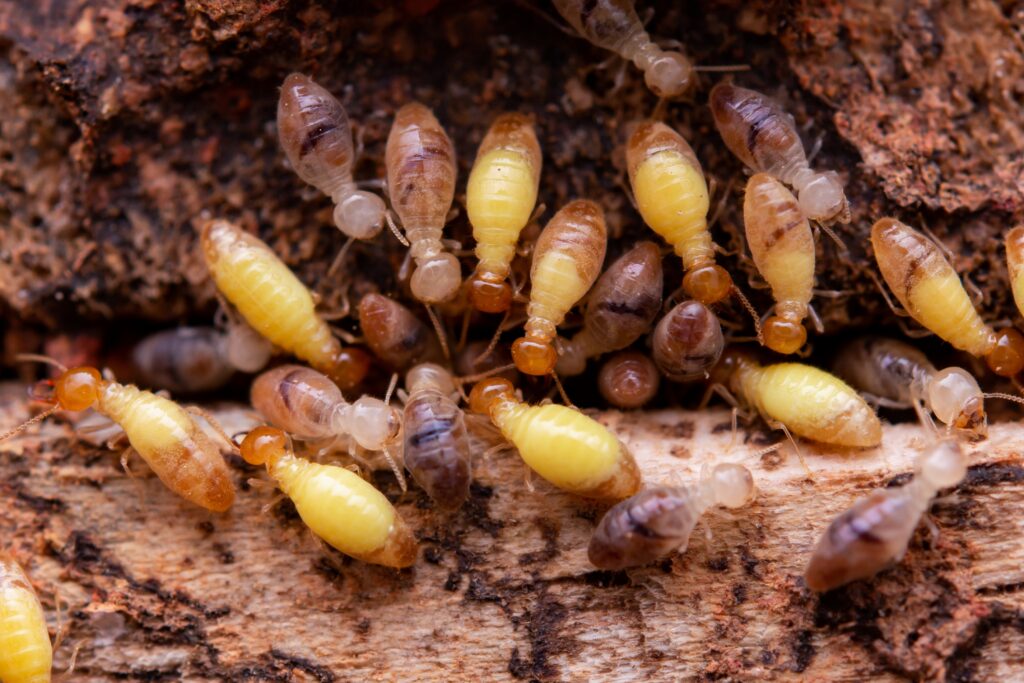
Imagine this scenario. You finally bought that beautiful craftsman home in the Bishop Arts District or maybe a sturdy ranch-style house in Plano. You have spent years curating the furniture, painting the walls the perfect shade of “greige,” and hosting backyard barbecues. One afternoon, you lean against a doorframe while chatting with a neighbor, and suddenly, the wood gives way. Your hand goes right through the trim, revealing a dark, papery mess inside. Your stomach drops. This is not just rot; it is something alive.
For many homeowners in Dallas, this is not just a nightmare scenario — it is a reality. We see it happen far too often. Termites are often called “silent destroyers” because they can chew through wood, flooring, and even wallpaper without being detected for years. By the time you notice the problem, the destruction is often severe.
Let’s walk through everything you need to know about protecting your biggest investment. We will explore exactly what does termite damage look like, how to identify the signs of termite damage early, and the often-overlooked health risks associated with these pests. We will also tackle the tricky questions about insurance and discuss termite damage repair. Finally, we will show you how to secure your home with top-tier termite pest control right here in Texas.
What Does Termite Damage Look Like? Visualizing the Destruction
When we ask the question, what does termite damage look like, the answer is rarely simple because so much of it happens out of sight. Unlike a burst pipe or a broken window, termite damage usually starts from the inside out.
Subterranean termites, which are the most common type of pestwe deal with here in Dallas, eat soft wood fibers and leave the harder grain behind. This creates a honeycomb pattern inside the timber. To the naked eye, the wood might look perfectly normal on the outside, perhaps just a little uneven or blistered. However, if you were to cut into a beam suffering from severe termite damage, you would see galleries—long, parallel grooves where the insects have feasted.
Buckling Wood and Swollen Floors
One of the most distinct visuals is wood that looks like it has water damage. Termites introduce moisture into their environment to survive. This causes wood to swell. You might notice your windows becoming harder to open or your doors sticking in the jambs. Many homeowners mistake this for humidity-induced swelling, especially during our muggy Texas summers, but it is often a hallmark of termite damage.
Blistered Paint or Drywall
Another visual clue answers what does termite damage look like on walls. If you see paint that is bubbling or peeling, or drywall that looks crushed or indented, do not just scrape it off and paint over it. Termites can chew through the paperboard on drywall, leaving just the outer layer of paint intact. If you press on these blisters, they might break, releasing a fine powder or revealing the workers underneath.
We recommend inspecting your baseboards closely. If they look crushed or if the wood crumbles when you touch it, you are likely looking at advanced termite damage. It is not a pretty sight, and it is certainly not one you want to ignore.
Signs of Termite Damage | Identifying the Red Flags
Knowing what does termite damage look like is only half the battle. You also need to be vigilant about the active signs of termite damage that indicate an infestation is currently underway. Catching these signs early can save you thousands of dollars in termite damage repair costs down the line.
Mud Tubes
If there is one sign that acts as a smoking gun, it is the mud tube. Subterranean termites build these pencil-sized tunnels to travel between their underground colony and their food source — your house — without being exposed to drying air or predators. You will often find these brown, clay-like tubes running up your foundation, along exterior walls, or even inside your garage. Breaking a tube open might reveal live termites. Even if the tube is empty, it is one of the signs of termite damage, indicating that they have been there and may still be active nearby.
Discarded Wings
Termite swarmers are the reproductive members of the colony. In the spring, usually after a rain, they fly out to start new colonies. Once they land, they twist their wings off. finding piles of discarded wings on windowsills, near doors, or on your deck is a clear indication that a swarm has occurred nearby. While seeing swarmers does not always mean they have established a colony in your walls yet, it is one of the most urgent signs of termite damage potential.
Frass (Termite Droppings)
Drywood termites, unlike their subterranean cousins, do not use mud tubes. Instead, they live inside the wood they eat. To keep their tunnels clean, they push their fecal pellets, known as frass, out of small kick-out holes. These piles look remarkably like sawdust or coffee grounds. If you keep sweeping up mysterious piles of “dirt” underneath a specific piece of furniture or near a wall, you are likely seeing one of the definitive signs of termite damage.
Hollow-Sounding Wood
We always suggest a simple tap test. Walk around your home and tap on your baseboards, door frames, and support beams with the handle of a screwdriver. If the wood sounds hollow or papery rather than producing a solid thud, the interior has likely been eaten away. This auditory clue helps confirm what does termite damage look like on the inside without having to tear the wall apart immediately.
Hidden Health Risks From Termites | More Than Just Wood
While termites do not bite humans or transmit diseases directly like mosquitoes or ticks, termite infestations can pose significant indirect health risks.
Mold and Respiratory Issues
Termites thrive in humid environments. As they chew through wood, they release moisture, which can create the perfect breeding ground for mold and mildew. Mold spores can circulate through your HVAC system, causing allergic reactions, asthma attacks, and other respiratory issues for your family. If you are dealing with unexplained allergies and you also suspect signs of termite damage, the two might be connected.
Structural Collapse
This is the most frightening risk. Severe termite damage compromises the structural integrity of your home. We have seen cases where ceilings have sagged dangerously, floors have become weak enough to fall through, and patio covers have collapsed. Living in a home with compromised load-bearing walls is a genuine safety hazard.
Pesticide Misuse
When homeowners panic upon finding signs of termite damage, they often resort to DIY chemical treatments. Improperly applying strong chemicals without professional training can pose health risks to pets and children. This is why we always advocate for professional pest control services for termites — we know how to apply treatments safely and effectively without endangering your household.
Does Insurance Cover Termite Damage? The Financial Reality
One of the first calls a homeowner makes after discovering a termite infestation is to their insurance agent. The question on everyone’s mind is: Does insurance cover termite damage?
We hate to be the bearer of bad news, but in almost all cases, the answer is no. Standard homeowners’ insurance policies generally view termite infestations as a preventable maintenance issue. Insurance providers operate on the logic that termite damage happens slowly over time, unlike a sudden fire or storm. Therefore, they believe it is the homeowner’s responsibility to detect and prevent it.
Is termite damage covered by insurance under any circumstances?
There are very rare exceptions. For example, if termite damage causes a beam to collapse and that collapse causes a fire or breaks a pipe that floods the house, the resulting fire or water damage might be covered. However, the cost of the termite damage repair for the beam itself will still likely fall on you.
This reality highlights why prevention is so critical. Since you cannot rely on a policy payout to fix the problem, investing in pest control for termites is essentially a form of self-insurance. It protects your wallet from the massive costs of structural restoration. If you are asking, “Is termite damage covered by insurance?” because you are currently buying a home, we strongly recommend getting a separate Wood Destroying Insect (WDI) report before closing. It is the best way to avoid inheriting a financial disaster.
How To Repair Termite Damage | Restoring Your Home
Once the pests are gone, you are often left with a mess. Termite damage repair is a crucial step in getting your home back to normal. The approach to repair depends entirely on the severity of the destruction.
Surface Repairs and Hardeners
If the termite damage is superficial — meaning the termites only grazed the surface or made small tunnels without compromising the wood’s strength — you might be able to use wood hardeners. These are chemical sealants that soak into the wood fibers, hardening them and preventing further decay. After the hardener cures, you can use wood fillers to smooth out the surface before sanding and repainting. This is the best-case scenario for termite damage repair.
Section Replacement
When the damage goes deeper but hasn’t destroyed the entire structure, we often recommend “sistering” or section replacement. This involves cutting out the damaged portion of the wood and replacing it with fresh lumber. Alternatively, sistering involves bolting a new, strong piece of wood directly alongside the damaged beam to take over the load-bearing duty. This is a common method for termite damage repair in attics and crawl spaces.
Structural Overhaul
In the worst cases, where the signs of termite damage were ignored for too long, a complete structural overhaul is necessary. This might involve jacking up the house to replace the sill plate, main support beams, or floor joists. This type of termite damage repair is labor-intensive and expensive, often requiring licensed contractors and structural engineers.
Before starting any termite damage repair, it is absolutely vital to confirm that the infestation is 100% eliminated. Repairing wood while termites are still active is like putting a band-aid on a broken leg—it won’t solve the problem, and they will just eat the new wood you install. This is where our pest control services for termites come into play.
Termite Pest Control | Prevention and Elimination
Effective termite pest control is not a one-time event; it is an ongoing process of defense. In Dallas, our soil is rich with termite activity, meaning your home is always under potential siege.
Liquid Soil Treatments
One of the most traditional and effective methods of pest control for termites is creating a chemical barrier around the foundation of your home. We trench around the perimeter and apply a liquid termiticide. When termites try to tunnel through this treated zone to get to your house, they come into contact with the material. Modern treatments are non-repellent, meaning the termites don’t know they are walking through it. They carry the active ingredient back to the colony, eventually eliminating the queen and the entire population.
Bait Station Systems
Another popular method of pest control services for termites involves bait stations. We install these stations in the ground around your property. They contain wood or cellulose material that termites love. Once we see activity, we switch the bait to a material laced with a slow-acting inhibitor. The worker termites bring this “food” back to the colony, and it disrupts their growth cycle. This is a great option for homeowners who prefer a less invasive approach than trenching.
Wood Treatments
For new construction or during major renovations, we can apply borate-based solutions directly to the wood frame of the house. This makes the wood inedible to termites. It is a fantastic proactive step in termite pest control.
We cannot stress enough that over-the-counter sprays are rarely effective for an established colony. They might kill the few termites you see, but they do nothing to stop the thousands hiding underground or in your walls. Professional pest control for termites uses industrial-grade solutions and strategic placement that you simply cannot replicate with hardware store products.
Getting Rid of Termites in Dallas | Why Choose Pest GOATS?
When you see signs of termite damage, panic is a natural reaction. But you do not have to face it alone. For over 30 years, Pest G.O.A.T.S. Pest Control been the first line of defense for homeowners in Dallas, Texas. We understand the specific challenges of our local environment and how the Texas climate drives termite behavior.
We don’t just spray and pray. We offer comprehensive pest control services for termites that start with a meticulous inspection. We identify what does termite damage look like in your specific home, trace the infestation to its source, and develop a customized plan to eliminate it. Whether you need an emergency intervention or a preventative maintenance plan, we are here to help you get rid of termites in Dallas once and for all.
Do not let termite damage devalue your property or threaten your family’s safety. If you suspect you have an issue, or if you just want peace of mind, reach out to us. We will handle the pests so you can get back to enjoying your beautiful home.
Ready to protect your investment? Contact our Dallas pest control company today for a comprehensive termite inspection and let us show you why we are the Greatest Of All Time in Dallas pest control.